Local SEO for Home Service Businesses: The Complete Guide
Keypoints
- Local SEO is the set of practices that gets your business found on Google Maps and in local search results when someone nearby searches for your trade.
- Your Google Business Profile, your reviews, and consistent business information across the web matter more than most owners realize.
- 97 percent of consumers read reviews before choosing a local business, according to BrightLocal’s 2026 survey, so review volume and recency carry real weight.
- You can do parts of local SEO yourself. Other parts take ongoing time that most owners do not have.
- Costs vary widely based on your trade, your service area, and your current website. There is a real range, not one flat number.
- Results take months, not days. Knowing what to watch for early helps you judge whether it is working.
Quick test: if someone nearby searched “plumber near me” or “emergency HVAC repair” right now, would your business actually show up? Most home service owners have no idea, and that uncertainty is exactly what this guide fixes.
Some businesses seem to show up everywhere on Google. Others, doing equally good work, stay practically invisible, and the difference usually has nothing to do with luck. It comes down to a specific, learnable set of practices called local SEO: what it is, what it costs, whether it is worth paying someone to handle, and how to tell whether the work being done, yours, an employee’s, or a company like Outrank Strategy’s, is actually paying off.
This guide covers the big picture on purpose. The full breakdown on pricing, how this plays out across specific trades, and ranking across multiple cities each get a dedicated guide. Here, the job is the complete, honest picture first.
What Is Local SEO, and Why Does It Matter for a Home Service Business?
Local SEO is the practice of improving how your business shows up when someone searches with local intent, things like “electrician near me,” “pest control in [city],” or “24-hour plumber.” Google treats these searches differently than a general one. Instead of the usual list of blue links, it leads with a map and three highlighted businesses, often called the local pack or map pack, and most people never scroll past it.
That matters enormously for home service businesses. Electrical contractors, HVAC and plumbing companies, pest control operators, restoration crews: almost none of these get searched by brand name. People search by need and location, usually right when they need help, and whoever shows up in that moment gets the job.
How Is Local SEO Different From Ranking Nationally, or From Showing Up in ChatGPT?
National SEO chases broad, non-local searches, which is not much use to a business that only serves customers within driving distance. Local SEO aims narrower: ranking well inside your specific service area. It is a smaller target, and a far more realistic one.
AI tools like ChatGPT are starting to answer “who should I call” questions directly, without ever sending anyone to Google. That is a real, fast-growing shift, but it works differently enough from traditional local SEO that it earns its own guide rather than a couple of paragraphs tacked on here. For now, just know the two are cousins, not twins.
What Actually Makes a Local Business Show Up in Google Search Results?
There is no secret formula here. The ranking factors that carry the most weight are:
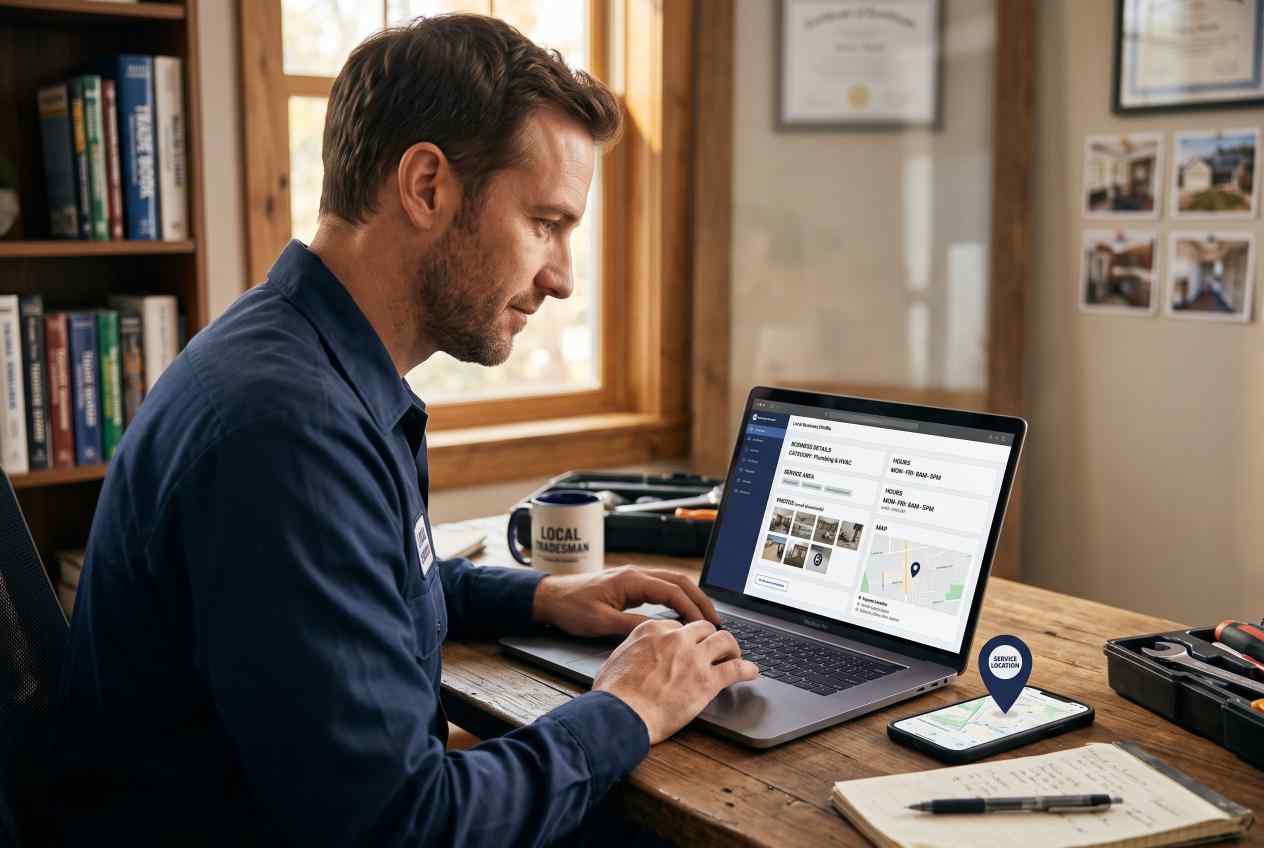
Your Google Business Profile. This free listing might be your single most valuable local search asset. Pick the most accurate primary category, add a few relevant secondary ones, and keep hours, photos, and services current. A well-maintained profile consistently outperforms one left untouched for years.
Reviews. Volume matters, but so does recency. According to BrightLocal’s 2026 survey, 97 percent of consumers read reviews before choosing a local business, so a handful of recent reviews often beats a large pile of stale ones.
Consistent business information. Your name, address, and phone number, often called NAP, need to match exactly across your website, your Google Business Profile, and every directory that lists you. It sounds minor. It quietly undercuts everything else you do when it is wrong.
Your website and service pages. Write for the person calling, not the algorithm, and say clearly what you do and where. Google rewards a page written for customers over one stuffed with keywords.
Proximity and relevance. Distance to the searcher matters, but it is not entirely out of your hands. A business that dispatches from a home or non-public office can hide its exact address and set a service area instead, right in its Google Business Profile settings, which changes how Google evaluates proximity. Relevance is fully in your control: how clearly your listing and site match what someone is searching for. Tools like GeoMyWebsite help businesses covering a wide territory reinforce exactly where they work.
Operating in more than one city adds another layer, big enough to earn its own dedicated guide rather than a quick aside here.
Is Local SEO Worth Paying For, or Can You Do It Yourself?
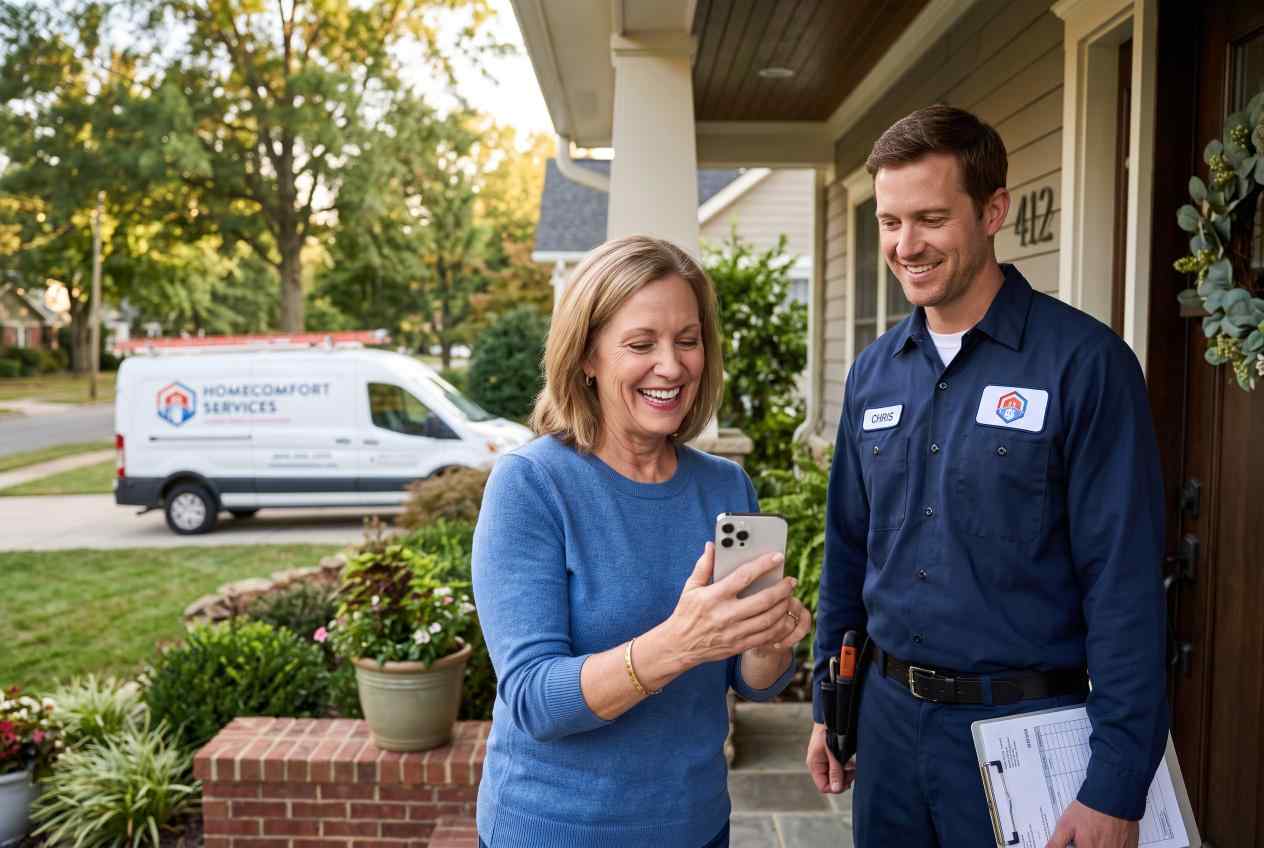
Some of this you can absolutely do yourself. Claiming and filling out your Google Business Profile costs nothing but time. Asking a happy customer for a review is something you could start doing today, this afternoon, for free.
The part that gets harder to DIY is everything ongoing: keeping your information consistent across dozens of directories (often called citations), writing service pages that actually rank, and catching listing errors or competitor interference before they cost you calls (tools like Greencheck handle that kind of monitoring automatically). Doing all of it month after month, on top of running your business, is usually the part owners let slide or eventually hand off.
How Much Does Local SEO Cost?
There is no single honest number here, and anyone who gives you one without asking about your trade, your service areas, or the state of your current website is guessing. Pricing genuinely varies based on those factors. We break down real numbers in a companion pricing guide, but if you want to see what we charge today, our Pricing page lays it out with no hidden fees.
What Should You Look for in the Best Local SEO Company for a Small Business?
Whether or not you ever hire Outrank Strategy, this is worth knowing on its own. Whether you are hunting for the best local SEO company for small businesses in general, or the best SEO company for home service businesses specifically, the checklist looks the same.
A good provider explains what they are doing in plain language, not vague jargon. They are upfront about what you own if you leave, instead of locking your website or Google Business Profile behind a long contract. They have real experience with home service or trade businesses, because a plumber gets found online differently than a retail shop does, and they set honest timeline expectations instead of promising results by next week.
How Long Does Local SEO Take to Work, and How Do You Know It’s Working?
Set your expectations around months, not days. Most businesses start seeing early movement somewhere between 3 and 6 months in, with stronger results building from there.
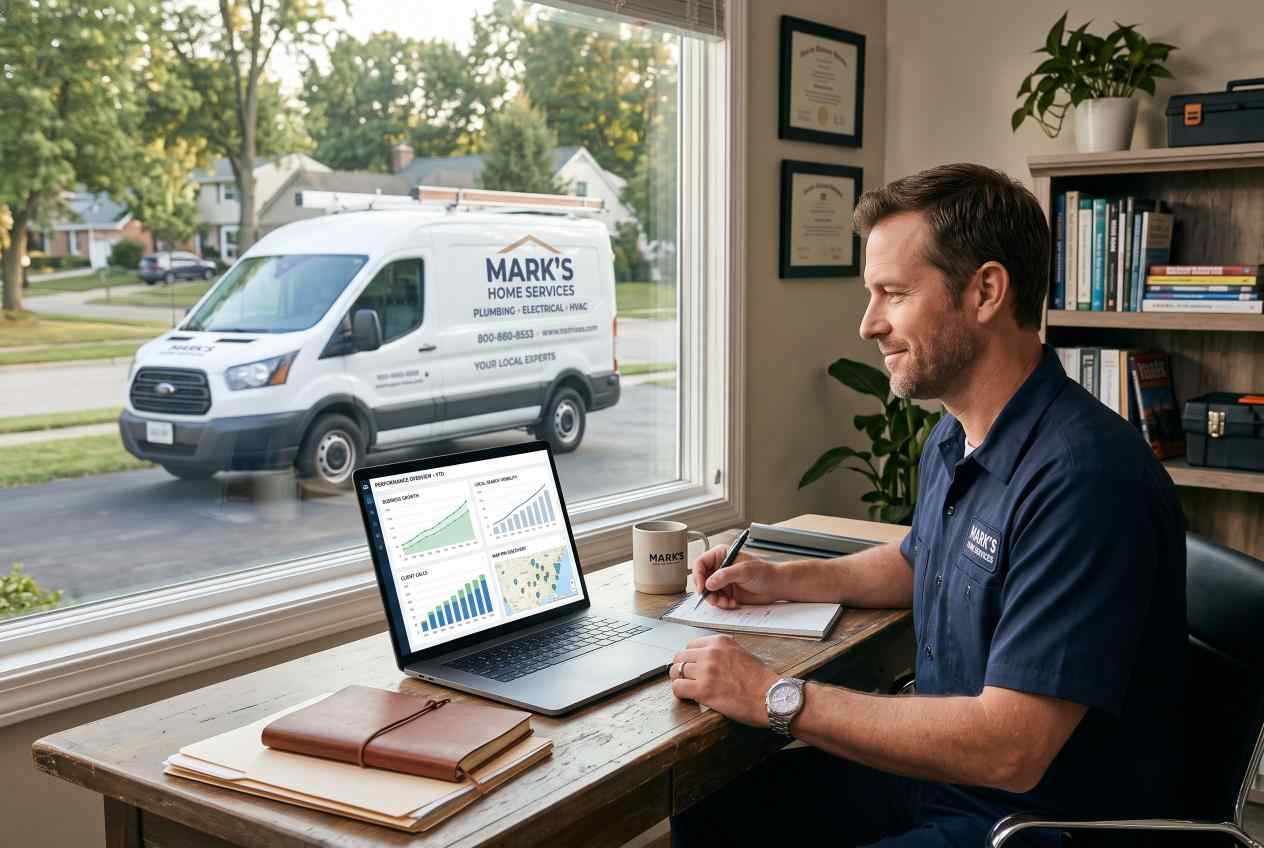
While you wait, watch for the early signs: more views and calls on your Google Business Profile, a steadier flow of new reviews, gradual movement upward for the searches that matter to you. Think of those as your leading indicators. Calls and booked jobs are the lagging indicator, the one that shows up later and actually pays the bills.
Real Examples: What Local SEO Looks Like in Practice
Here is what that early movement actually looks like once it starts.
Picture a two-truck HVAC company whose Google Business Profile has not been touched in years: wrong categories, stale photos, an old address. Cleaning that up alone is often enough to move a business from page two of the map results into the local pack within a couple of months.
Or picture a pest control company with a stellar truck reputation and almost no reviews online. Simply asking every satisfied customer for a review can turn scattered ratings into a steady, growing number within a season, shifting how often the business gets picked over a competitor with a similar rating but far fewer reviews.
Situations like these come up constantly, and both come down to the same thing: consistency.
Expert Tips for Local SEO That Actually Works
Consistency is easy to say and easy to skip in practice, so here are the specific habits that keep it from slipping.
Respond to every review, not just the good ones. A quick thank you takes thirty seconds and signals real activity. On a negative one, stay calm, acknowledge the issue, and say what you did about it: the next customer reads that reply more closely than the complaint itself. If asking for reviews feels like one more job, tools like GetStars can send that request automatically after every visit.
Do not duplicate service area pages with just the city name swapped out. Google notices the copy-paste job, and so do readers.
Make sure your Google Business Profile categories match the services you actually offer, exactly. A small mismatch here can quietly cost you visibility on searches you should already be winning.
The moment anything changes, a new phone number, a move, a rebrand, update it everywhere. Stale information scattered across the web is one of the most common local SEO problems, and one of the easiest to fix.
Conclusion and CTA
Local SEO is not some black box only a handful of specialists understand. It is a specific, explainable set of practices, and now you know what they are: a strong Google Business Profile, consistent information everywhere your business appears, real reviews, honest expectations, and steady work over time.
If you would rather hand this off and get back to running your business, Outrank Strategy offers a free strategy session. We will take an honest look at how you currently show up in local search and tell you exactly where the opportunity is. Prefer to see real numbers first? Our Pricing page lays out costs with no hidden fees.
FAQs
What's the single best way to rank a local business on Google?
Do I need a blog to rank locally?
Not necessarily. Blog posts help in some cases, but for most home service businesses, solid service pages and a well-maintained Google Business Profile carry more weight. It is a big enough question that we give it a full answer in a dedicated guide.
Does my Google Business Profile matter more than my website?
What if I serve more than one city or service area?
Ranking across multiple areas takes its own strategy, built around genuinely distinct, well-written pages for each one rather than a single page copied with the city name swapped out. It is a big enough topic that we cover it in a dedicated guide.
Is local SEO different from showing up in ChatGPT or AI search results?
Yes, though the two are related. Some of the same signals reviews and consistent business information among them, help with both. Still, AI search tools work differently enough from traditional Google rankings that they are worth understanding as their own topic.
How long until I see results from local SEO?
Can I do local SEO myself with no experience?
What's the difference between local SEO and paid ads like Google Ads?
Local SEO builds rankings you do not pay for directly, but it takes time to build. Paid ads get you visibility immediately, and that visibility disappears the moment you stop paying. Our guide to Google Ads for local service businesses breaks down when paid ads make more sense than waiting on SEO.